


WARSAW FOR BEGINNERS
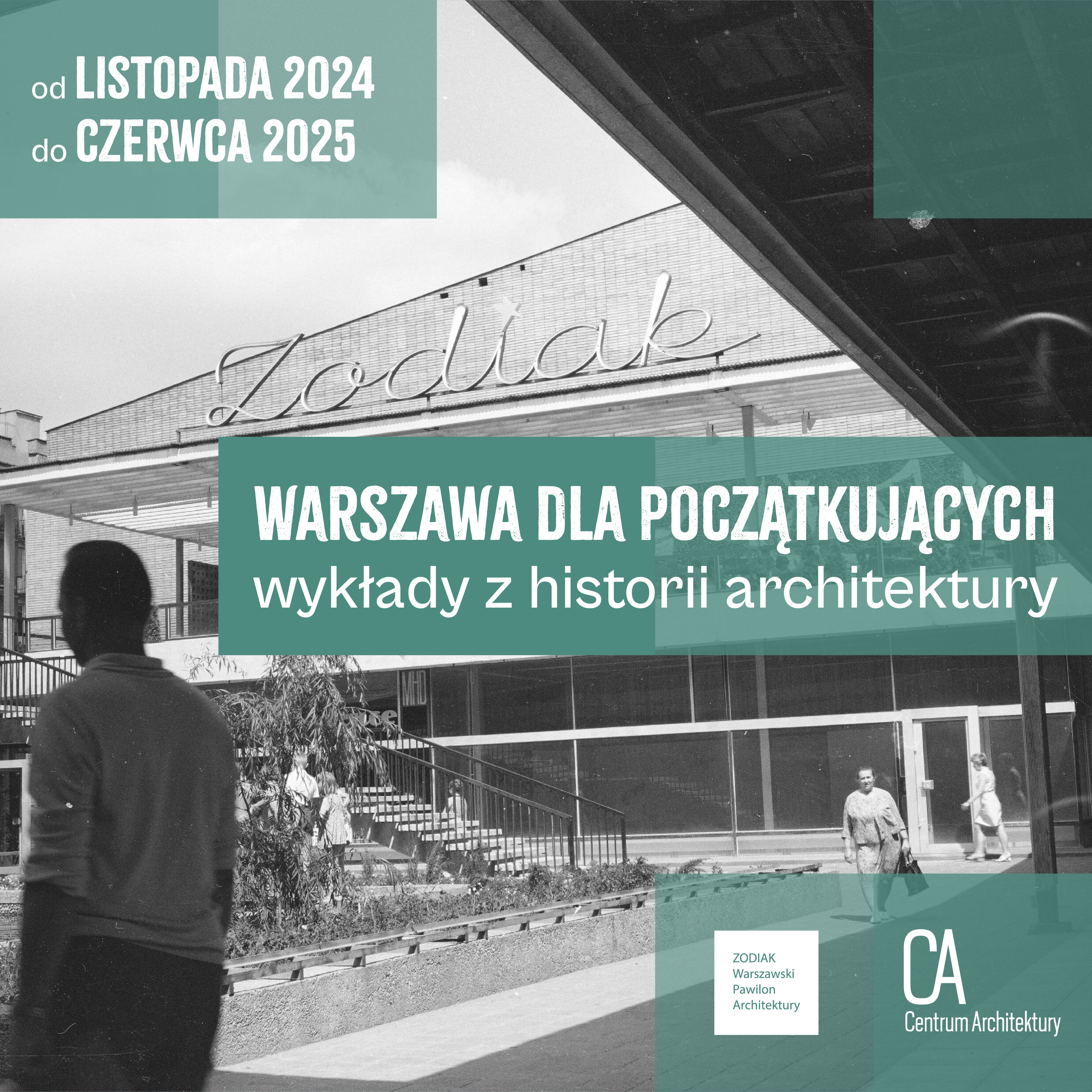
Why were the 1990s colorful? In which churches can we find the greatest treasures? Where were the most interesting specimens of Warsaw’s gastronomy created? Why did some monuments survive and others not? How did the center of Warsaw wander?
You will hear answers to these and many other interesting questions during eleven lectures at Zodiak by specialists in the history of Warsaw architecture and space.
The series was prepared by the curatorial team from Fundacja Centrum Architektury:
- Agnieszka Rasmus
- Filip Dańda
- Anna Wrońska
It is intended for people who have no professional contact with the topics of architecture or history of Warsaw, but would like to get to know their city better.
We invite you to lectures from November 2024 to June 2025.
What was heard? The sounds of Warsaw at the turn of the 19th and 20th centuries.

Everyone knows the area between Nowy Świat, Aleje Jerozolimskie, Marszałkowska, and Świętokrzyska streets. This is where the Zodiak is located! We all come here because it’s the city center. But it wasn’t always this way!
What does it mean to “listen to history”? How do we understand the sounds of the past, which cannot be heard on any recording, but which are recorded in memories, anecdotes, and complaints from years past? Is this a story about the sounds, or perhaps about the people who listened to them?
Marta Michalska
A doctor of history and a researcher of sounds in the past, she writes, edits, and occasionally sings. She writes and speaks about how we experience the sounds around us and how we can explore sounds that have already disintegrated in the historical din. She was awarded a prize by the Foundation for Polish Science in the FNP MONOGRAPHS competition, which resulted in the publication of the book “Sounds, People, and Listening to the City. Selected Elements of the Phonosphere of Warsaw at the Turn of the 20th Century” (2024). The book was also nominated for the Literary Award of the Capital City of Warsaw (2025) and the Jan Długosz Award (2025). She hosts the LARMO program on Radio Kapitał about sound culture. She doesn’t have a favorite sound, but she enjoys seeing others discover their own.
North Downtown Under the Microscope. Between Nowy Świat and Marszałkowska Streets.

Everyone knows the area between Nowy Świat, Aleje Jerozolimskie, Marszałkowska, and Świętokrzyska streets. This is where the Zodiak is located! We all come here because it’s the city center. But it wasn’t always this way!
The city center only “moved closer” here during the railway era. And right after World War II, architect Maciej Nowicki came up with the idea of deliberately and consciously treating the entire area between the Central Station and the Old Town eclectically. Preserve the old tenement houses, but also introduce modern elements. And so Smyka Street, Dom Chłopa (Peasant’s House), and finally Ściana Wschodnia (Eastern Wall) were created. And what was there before the tenement houses? The end of the city, fields and gardens! Chmielna Street was so difficult to green because it was simply a former narrow farm road. Ewa Ziajkowska will discuss the historical conditions of this area, which we remember less today, and their traces in today’s Śródmieście district.
Ewa Ziajkowska
Art historian. For two decades, she has been professionally associated with conservation services. She specializes in Warsaw and the Masovia region. She is co-author of conservation guidelines for local development plans for dozens of historic areas of the capital. She is also the author of conservation and urban planning guidelines for the area of interesting interest to us, Śródmieście Północne (Northern City Center), prepared for the ongoing competitions for the New Center of Warsaw (2020). She also collaborates with the Centrum Architektury publishing house. She is co-author of two architectural atlases of Warsaw districts: “PRA. Atlas of Warsaw Praga Architecture” (2020) and “ŚRÓD PN. Atlas of Northern City Center Architecture” (2021). She is also a co-author of good practice guides for historic estates and complexes published for residents by the Office of the Warsaw Conservator of Monuments, including those for Muranów, the post-war estates in Warsaw’s Praga district, the cottage estate in Jazdów, and the serial wooden houses in the Boernerowo estate.
The Space of the Former Warsaw Ghetto

What is the area of the former Warsaw Ghetto today? How far does it extend? Is it true that nothing remains of the old architecture in this part of the city?
Contrary to popular stereotypes, dozens of surviving pre-war tenements and buildings still stand within the boundaries of the former ghetto, having weathered both the war and the city’s post-war reconstruction. Old manhole covers, tram traction poles, and fragments of cobblestone have also endured. These very elements—often unnoticed in the daily urban landscape—carry the traces of the dramatic history of Warsaw’s Jewish community.
During the lecture, we will examine this “memory map” of the Warsaw Ghetto and look at the terrain as a palimpsest—a space where the past has not disappeared but has been covered by layers of new narratives and development.
Image courtesy of the Warsaw Ghetto Museum.
Masza Makarowa
Historian, journalist, and documentarian. At the Warsaw Ghetto Museum, she manages the oral history project. She is a city guide and the author of the Guide to the Former Warsaw Ghetto (2023).
A graduate of the Polish School of Reportage, the School of Historical Documentary Film, the University of Manchester, and the Moscow School of Social and Economic Sciences (“Shaninka”)—the latter closed by the Russian authorities. She has collaborated with the Russian organization Memorial.
She is the director of the documentary film “The Chief Physician’s Granddaughter” (2025), which tells the story of Ewa Heller-Ekblad, a Warsaw Ghetto survivor. Currently, she is continuing her film directing studies at the International Film School Un/Filmed and is working on a reportage book about Dr. Anna Braude-Heller, the chief physician of the Bersohn and Bauman Children’s Hospital. At TVP, she hosts the news programs Vot Tak and Oko na Wschód. She also researches Jewish colonization in the Far East, having spent significant time in Birobidzhan.
The Saxon Palace: A Multi-layered History

Once one of the most significant landmarks in Warsaw, the Baroque Saxon Axis was originally designed as a transverse route to the Royal Route.
The Axis itself tells a complex story: of the palace and its parade courtyard, of monuments both built and merely envisioned, and of reconstructions featuring planned arches, a column topped with a Tsar’s statue, and a ceremonial gateway leading to the park. It is a history of various proposals for an Orthodox cathedral, the construction of a tenement house that later served as military headquarters, and finally, the Tomb of the Unknown Soldier preserved as a “permanent ruin.”
This is a simplified chronicle of the Saxon Palace and the structures that emerged in its vicinity over the years. If you would like to explore the intricate details of this history, you are cordially invited to a lecture by Prof. Małgorzata Omilanowska.
Prof. Małgorzata Omilanowska, PhD
Art historian, graduate of the University of Warsaw, and Professor at the Institute of Art of the Polish Academy of Sciences. She is currently the Director of the Royal Castle in Warsaw.
A former fellow at over a dozen European academic institutions and a member of numerous expert councils, she has authored over a hundred scholarly articles and many books dedicated to 19th and 20th-century architecture. Beyond her research, she has played a pivotal role in state administration, serving as Undersecretary of State (2012–2014) and later as the Minister of Culture and National Heritage (2014–2015).
The Old Town Housing Estate

The Old Town (Starówka) is likely the most visited housing estate in Poland.
Warsaw’s Old Town—a symbol of the city’s reconstruction—was designed after the war not only as a historical reconstruction but also as a modern, self-sufficient residential complex. How was this vision realized? And how does the Old Town Housing Estate function seventy years later? Dr. Ewa Majdecka will discuss the design process and what life in the Old Town looks like today.
Ewa Majdecka
PhD in Sociology, researcher specializing in cultural participation and social engagement. She defended her doctoral thesis, “Producing the Space of the Old and New Town after Post-war Reconstruction,” at the Institute of Applied Social Sciences, University of Warsaw. She received a distinction for this work in the Mayor of Warsaw’s competition for the best diploma theses concerning the city and its development. Professionally, she is a digital product manager in the field of culture and cultural heritage.
The Thaw in Warsaw's Architecture

The phenomenon of the “Thaw” in Warsaw’s architecture during the second half of the 1950s marks a pivotal turning point between the conclusion of the capital’s reconstruction and the beginning of building a “contemporary” city.
During the lecture, you will explore the most significant projects of this period, illustrating how the shift in the political climate influenced the language of forms, function, and the overall perception of urban space. We will also examine how architects sought to find a balance between ideology and artistic freedom. This meeting will provide an opportunity to reflect on the significance of the Thaw as the birth of modern Warsaw.
Andrzej Skalimowski
Historian, editor, and author. He specializes in 20th-century history, specifically the relationship between political power and the creators of architecture. He is the author of the biography of Józef Sigalin, Warsaw’s first Chief Architect.
The wandering center of Warsaw
The series Warsaw for Beginners. Lectures on the History of Architecture is going to the city.
This time we invite you to the honorary tribune at Central Square.
Residents and tourists wander around Warsaw and look for the center, but they can’t always find it, because it wanders too! Since its foundation, Warsaw has changed its market square, the most important square, the forum of public life several times. Each of these changes is connected with an interesting story about the life and development of the city, as well as about the customs and needs of its residents and great events.
Let’s meet at Central Square, under the former honorary grandstand, to listen together to the eleventh and last lecture this season from the series “Warsaw for beginners. Lectures on the history of architecture”, which was recently awarded the Architectural Prize of the President of Warsaw for the best architectural event.
Is Central Square now another center of Warsaw?
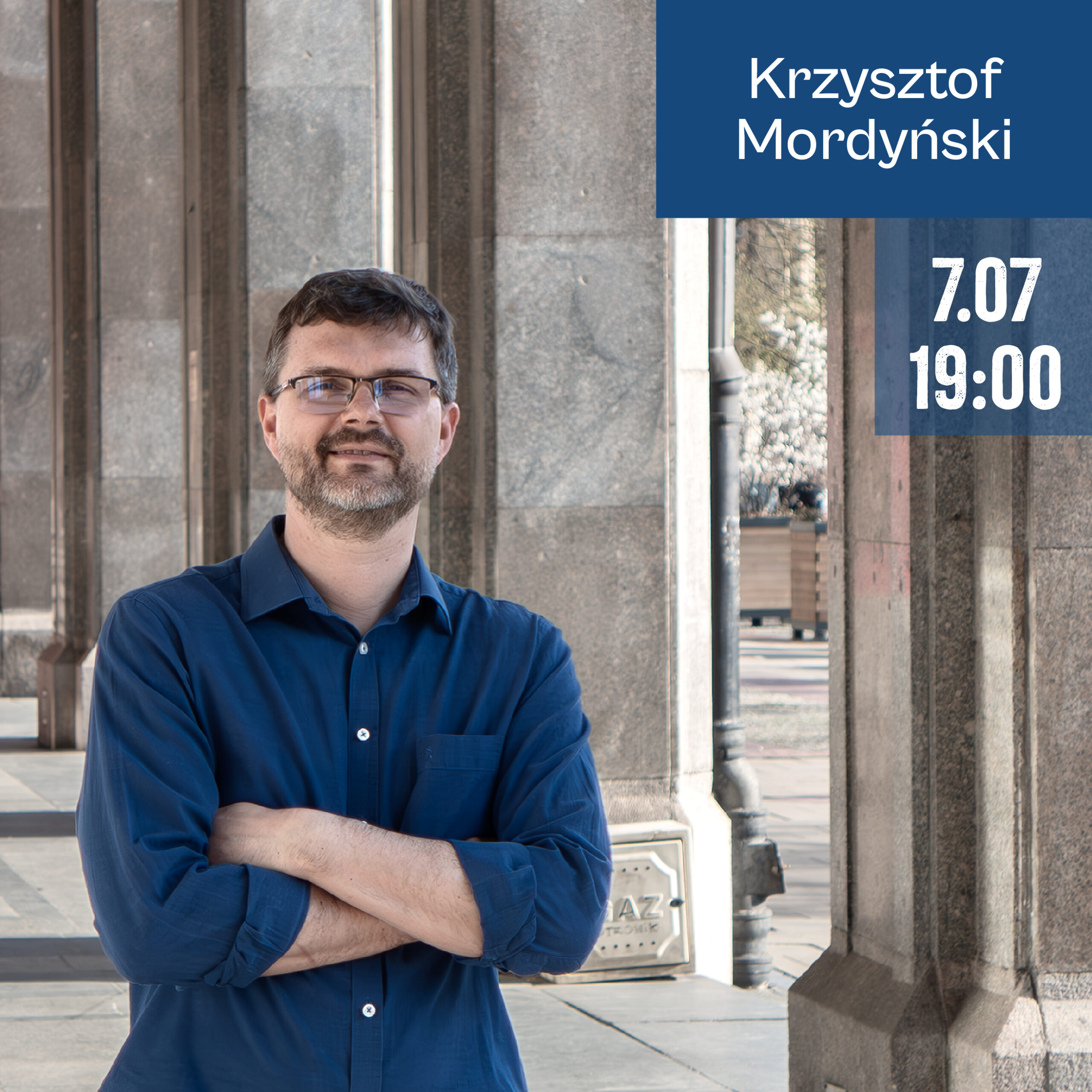
Krzysztof Mordyński
Historian and art historian, researches the history of architecture and urban planning in Warsaw, winner of the KLIO 2021 award, author of the book “Dreams about Warsaw. Visions of rebuilding the city 1945-1952”, co-author of “ŚRÓD PD. Ilustrowany atlas Śródmieścia Południowego” and the latest: “MDM. Marszałkowska dzielnica marzeń”, author of scenarios for several museum exhibitions, as well as catalogues and publications accompanying exhibitions, dozens of scientific and popular science articles. He works as a curator at the University of Warsaw Museum.
Co-author of the books “University of Warsaw. Historical Campus and Its History”, “From the Plague to COVID-19. Diseases, Epidemics and Pandemics in Medicine and the Humanities” and “Before COVID-19 Appeared. Diseases, Epidemics and Pandemics in Medicine and the Humanities, Part II”, and also awarded many times in the category “Best Lecturer” at the Open University of Warsaw. In addition, a guide to Warsaw. Other interests include: cemetery art, urban planning, Italian and German painting and the architecture of European universities.
Warsaw in the time of plague. How did diseases shape the city?
For the next lecture in the series Warsaw for Beginners we invite you to the Institute of Polish Culture of the University of Warsaw, i.e. the former St. Roch Hospital!
Address: Krakowskie Przedmieście Strret 26/28
Infectious diseases have plagued Warsaw since its inception. Initially, it was primarily the plague, with smallpox, typhus, syphilis, tuberculosis and cholera becoming increasingly serious. In recent years, the city has also been affected by the AIDS and COVID-19 pandemics. The lecture will present traces of epidemics in the space of Warsaw against the background of European tradition and heritage. It will discuss the former hospitals in the capital, where attempts were made to fight invisible enemies. It will discuss the impact of preventive medicine on urban planning, as well as works of art referring to the title theme. You will learn, among other things, which monuments in the capital commemorated the end of the epidemic, where and how syphilis were treated, and what symbols were assigned to selected plagues.
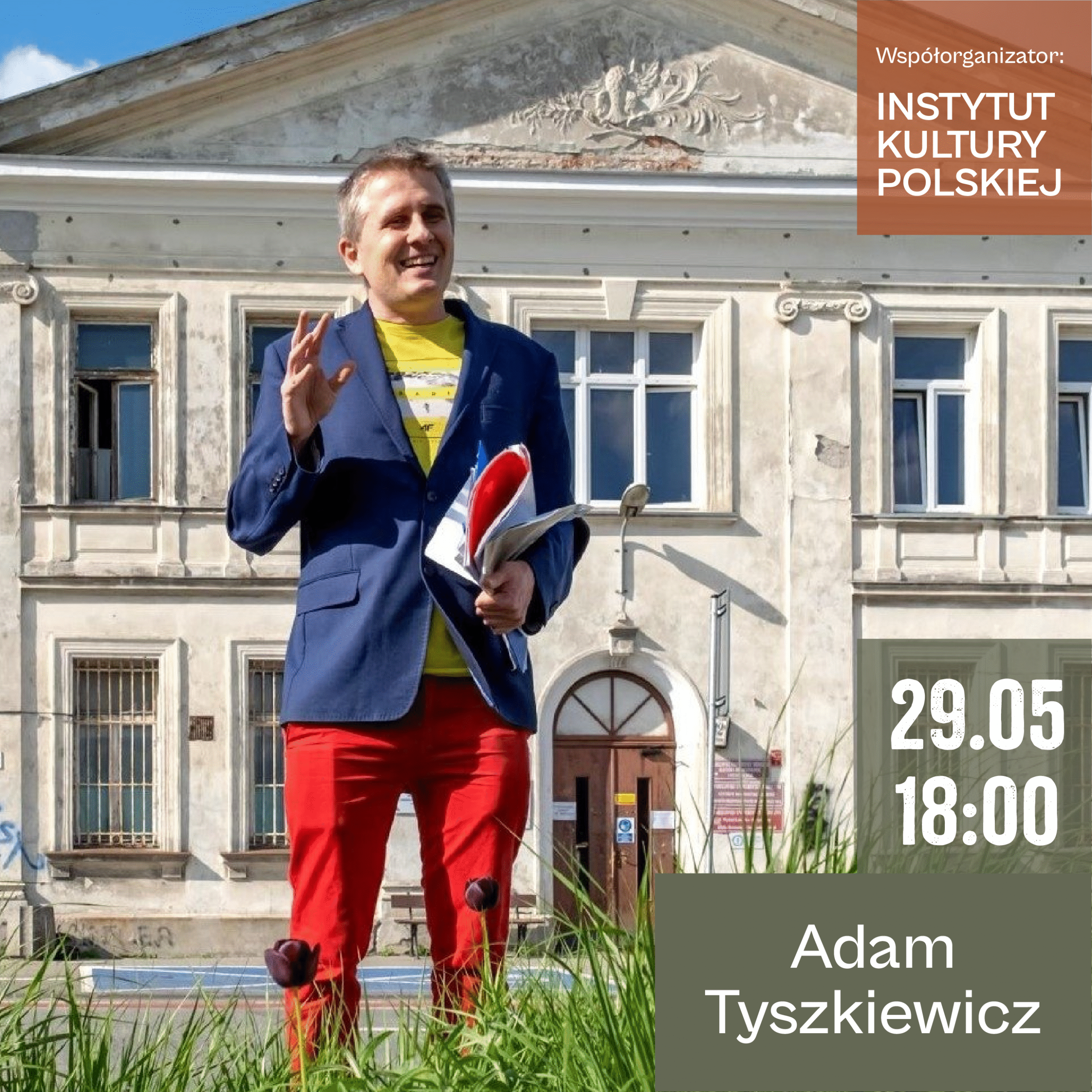
Adam Tyszkiewicz
Art historian, archaeologist and historian of medicine, lecturer at the Faculty of Geography and Regional Studies of the University of Warsaw. His scientific interests include the history of higher education, taking into account primarily the heritage of the University of Warsaw, as well as the history of infectious diseases, their symbolism in culture and iconographic representations. In the years 2018-2021 director of the Museum of the History of Medicine of the Medical University of Warsaw. Author of several dozen publications that appeared, among others, in “Rozprawy z Dziejów Oświaty”, “Almanach Warszawy”, “Kronika Warszawy”, “Muzealnictwo” and “Studia Wilanowskie”. Author of the book “Uroczystości, stroje i insygnia w ceremoniale Uniwersytetu Warszawskiego w latach 1816-1939”.
Co-author of the books “University of Warsaw. Historical Campus and Its History”, “From the Plague to COVID-19. Diseases, Epidemics and Pandemics in Medicine and the Humanities” and “Before COVID-19 Appeared. Diseases, Epidemics and Pandemics in Medicine and the Humanities, Part II”, and also awarded many times in the category “Best Lecturer” at the Open University of Warsaw. In addition, a guide to Warsaw. Other interests include: cemetery art, urban planning, Italian and German painting and the architecture of European universities.
Warsaw schools. Landscape with a millenium school

The series Warsaw for Beginners hits the city. We invite you to the first of the off-site lectures at the Komuna Warszawa Theatre.
Address: Emilii Plater Street 31
The axis of this lecture is millennial schools, because they dominate the landscape of Warsaw schools. There will be myth debunking, hidden knowledge and tasty anecdotes. But there will also be about the first urban schools of the 20th century and Starzyński’s action. And also about what is happening now, i.e. how lessons have been learned from modernist design in recent years.
Paweł Brylski
Author of texts and creator of exhibitions, he deals with language, narratives and negotiating ways of talking about art. He is interested in playing with museum concepts and combining artistic practices with the distribution of knowledge. For many years associated with the most important cultural institutions, where he dealt with cultural communication and education.
Together with Szymon Maliborski, he prepared an exhibition on design for education “How to Make a School?” for the Warsaw Under Construction 13 festival, organized by the Museum of Modern Art in Warsaw (nominated for the Architectural Award of the Mayor of Warsaw 2021). Then, the exhibition had its Poznań edition at the Śluza Gallery, as part of the activities of the Poznań Heritage Center in 2022. Currently, he is also associated with the environment of the Academy of Fine Arts, where, as a curator, he actively participates in the teaching processes of young artists, supporting their creative development and reflection on contemporary art.
What do Warsaw churches hide? The most valuable paintings and sculptures
In Warsaw, 18th-century works of great art have survived mainly in churches.
Where can we find the most beautiful angels, the most gracefully concerned putti, the most moved saints? These questions will be answered by Jakub Sito, an outstanding expert in Polish Baroque art. Therefore, let us prepare ourselves for a fascinating journey through the interiors and art of times that we do not often visit.
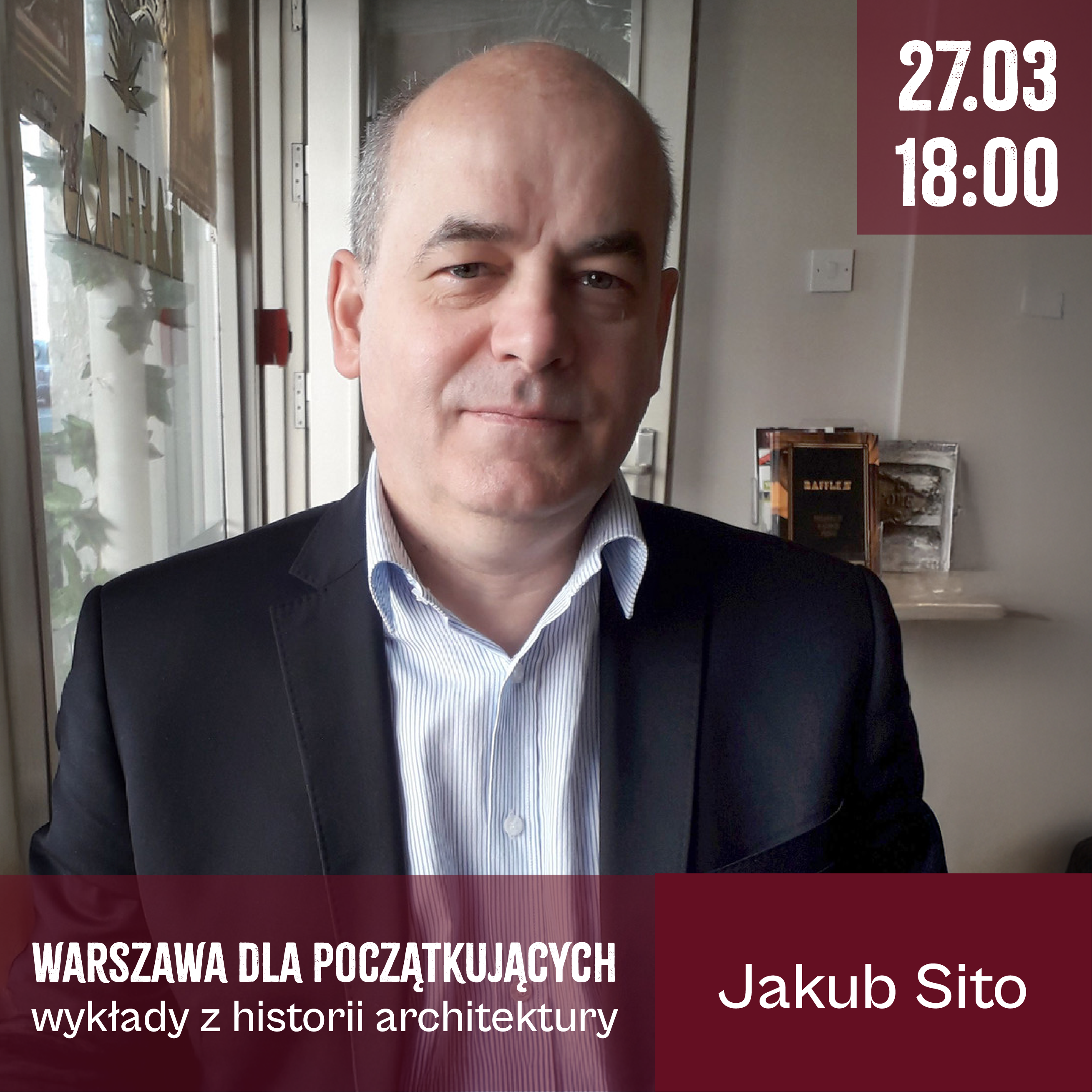
Jakub Sito
Art historian, graduate of the University of Warsaw and professor at the Institute of Art of the Polish Academy of Sciences. Author of the book “Wielkie warsztaty rzeźbiarskie Warszawy doby saskiej. Modele kariery – formacja artystyczna – organizacja produkcji” (Great Sculpture Workshops of Warsaw in the Saxon Period. Career Models – Artistic Formation – Production Organization) (Warsaw 2013), co-author of “Słownik architektów i budowniczych środowiska warszawskiego XV-XVIII w.” (Dictionary of Architects and Builders of the Warsaw Environment of the 15th-18th Centuries). He has also published nearly 200 scientific articles and books on sculpture and architecture of the 17th-18th centuries.
Since 2018, he has managed the grant of the National Humanities Development Program Common Heritage. Polonica in the collection of 18th-century architectural drawings in Dresden. He participates in conservation committees at Warsaw and Masovian historic buildings. Winner of the Rev. Prof. Szczęsny Detloff Award, granted by the Association of Art Historians, and the Hanna Szwankowska Award, granted by the Polish Historical Society. He was also awarded the gold medal “Meritorious for Polish Science. Sapientia et Veritas”.
Not only Zodiak. On the architecture of Warsaw gastronomy
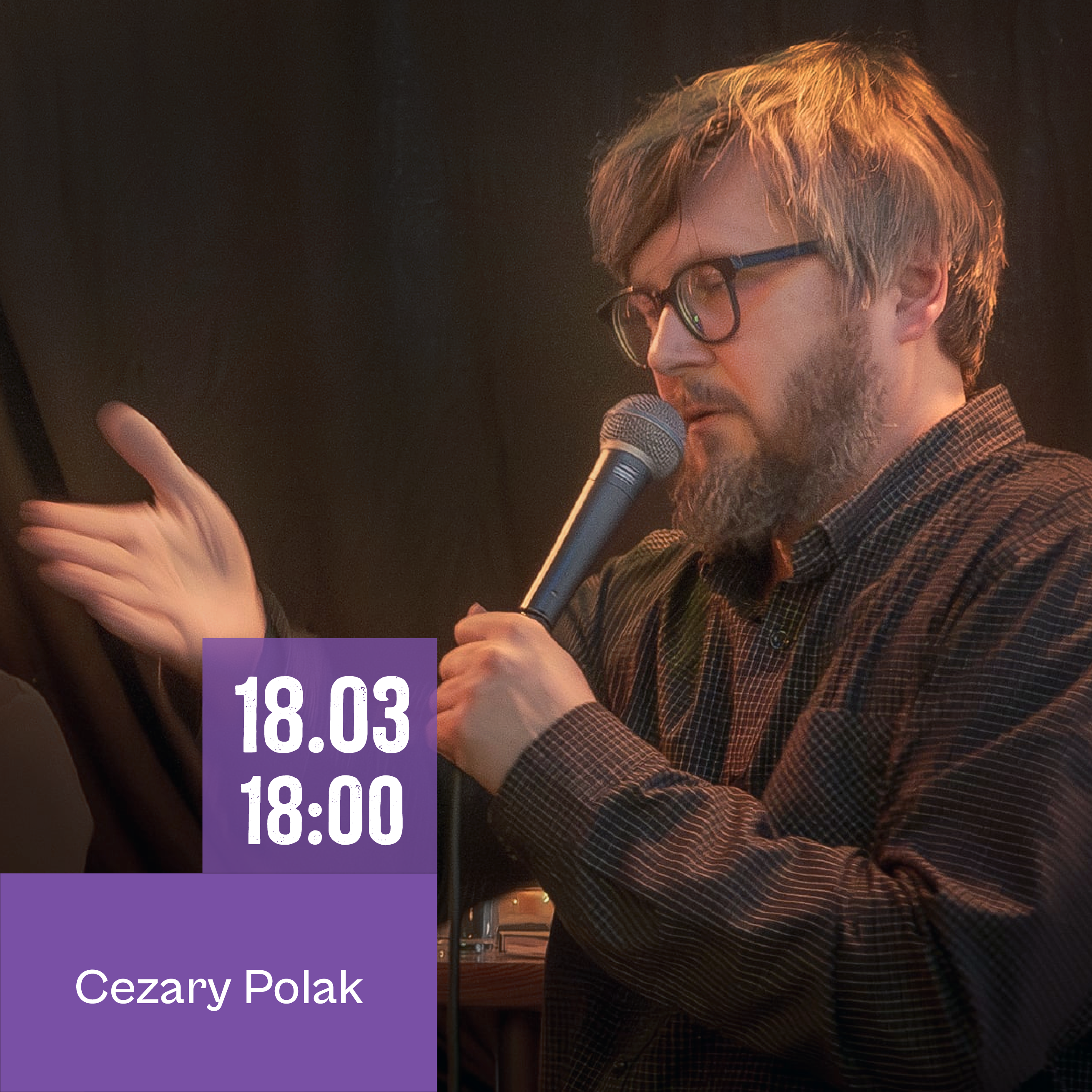
Złota Kurka, Praha bar, McDonalds, cafe at Plac Na Rozdrożu – get to know the most interesting places and interiors in the subjective choice of an active innkeeper.
We will start with a micro-panorama of Warsaw gastronomy, and specifically we will look at places where good cutlets were not always accompanied by the highest quality art. What’s more, there will be a lot of Gierek, a bit of private initiative, a small gastronomy, a night club, a milk bar, and even a disco and a night club.
Cezary Polak
A journalist who has published in, among others, “Gazeta Wyborcza”, “Dziennik”, “Przekrój”, “Tygodnik Powszechny”, “Polityka”, “Wprost”, “Teatr”, “Visegrad Insight” and “Ustach”. He is also a cultural animator and also studied Polish studies and film directing. He is the author of mini-dialogues included in the anthology “Literacki melanż z Pragi” and the originator and organizer of numerous social and cultural initiatives, such as the series “Literatura na peryferiach” and “Latące Muzeum”. Additionally, he hosts his own radio show “Polak Potrafi” on Radio dla Ciebie.
He lives in Grochów, where he founded the Kicia Kocia club-café, which hosts, among others, Warsaw studies lectures. What is more, he was awarded a medal by the mayor of Praga-Południe for his work for the district. He is also the co-author of the book “GRO. Illustrated atlas of architecture of Grochów”.
Housing for All. The First Post-War Housing Estates in Warsaw
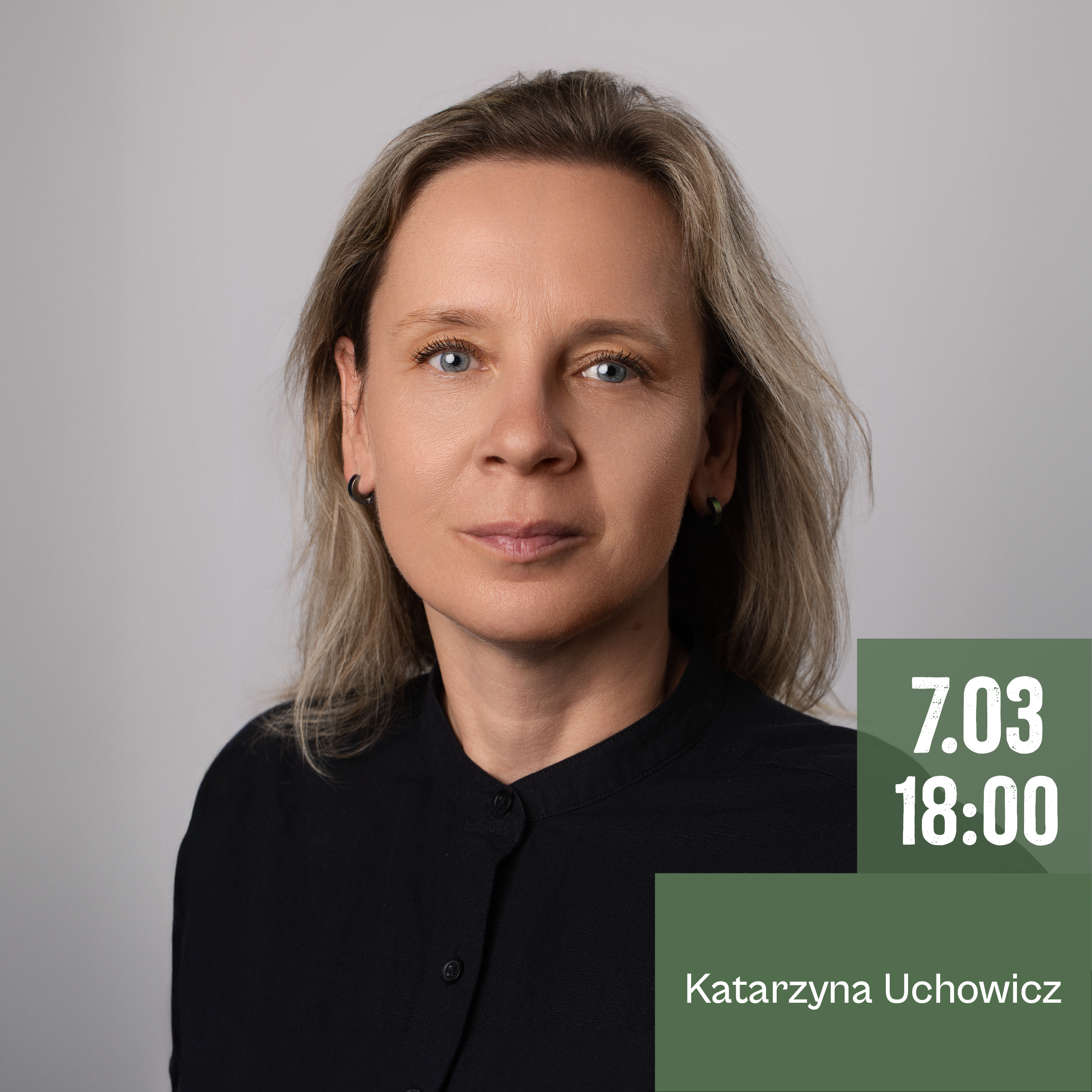
Horrific living conditions in a ruined city, a pressing need to rebuild primarily residential buildings, and the need to invent new types of housing estates – these were the challenges that Warsaw faced right after World War II.
How did architects cope with this challenge? What did they propose in this short, intense, but strange time between the cataclysm of war and socialist realism with its monumental, decorated buildings? Was the thinking modern or “pre-war”? Was it built of brick or prefabricated elements? Was it possible to implement the plan for “housing for all”?
Katarzyna Uchowicz
Architectural historian, curator. She works at the 20th and 21st Century Architecture Documentation Workshop at the Institute of Art of the Polish Academy of Sciences, as well as at the Inter-Faculty Department of History and Theory of Art at the Academy of Fine Arts in Warsaw. She lectures on the history and theory of 20th century architecture. She deals with 20th century architecture in an interdisciplinary approach, especially the architectural avant-garde and experimental work, forms of documentation and presentation of architecture.
Warsaw monuments. The art of survival
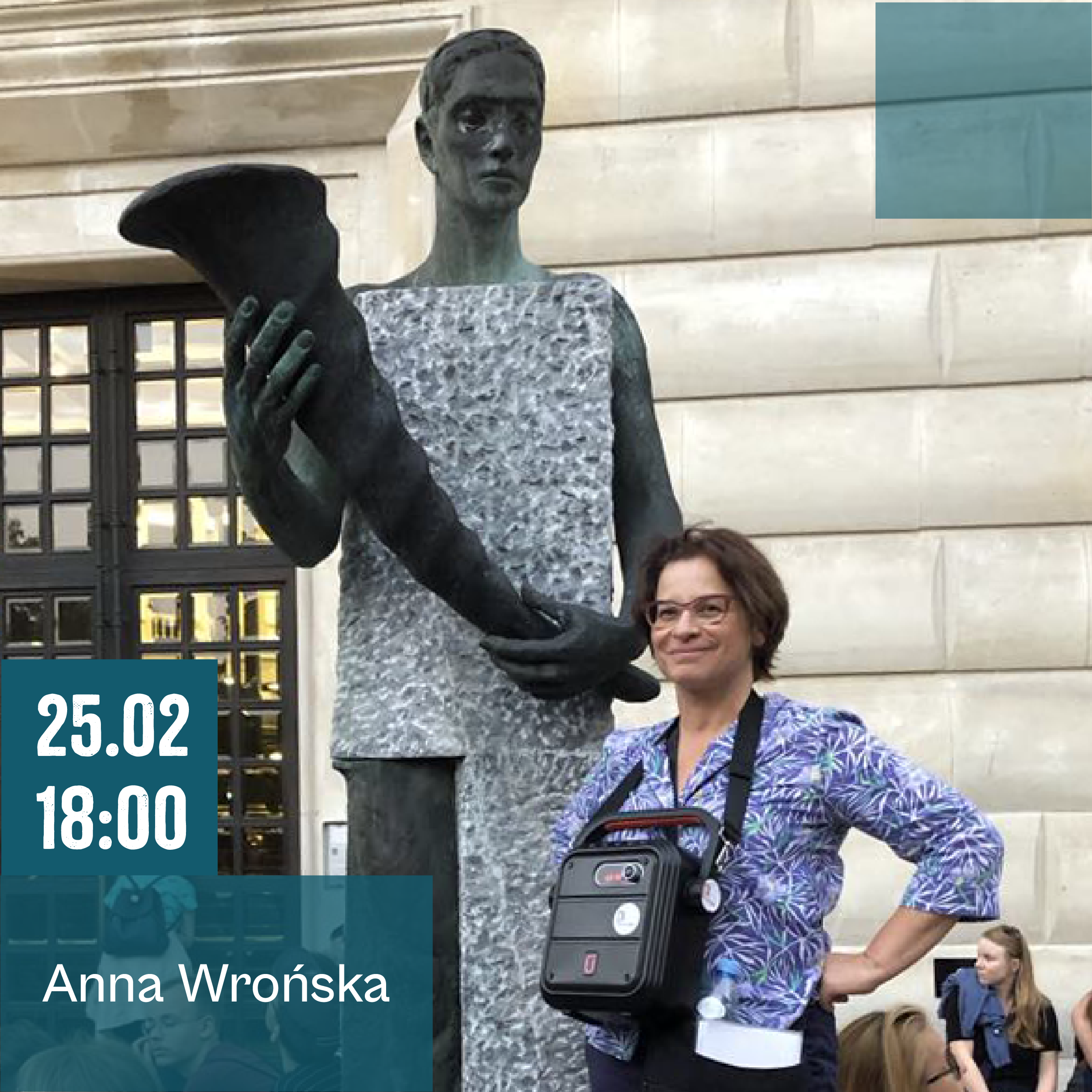
Although they were created to last and commemorate great figures, historical events and ideas that unite people, monuments in Warsaw tend to disappear without a trace. Some of them, for various reasons, we ignore as if they were not there at all. However, there are those whose presence seems obvious and necessary, without which Warsaw would be a different city. This lecture will be about them. What made them survive?
Anna Wrońska
Art historian, editor, journalist, worked at the Museum of the Academy of Fine Arts, the Museum of Warsaw, PWN Scientific Publishing House, ZPR Media Publishing House. Her specialty is architecture and sculpture. She is the author of many articles about architecture, houses and living, and co-author of GRO. An illustrated atlas of Grochów architecture. Since 2021, she has been working as a managing editor at the Architecture Center Foundation.
We are dismantling palaces. The best examples of palace architecture - from the perspective of an architect
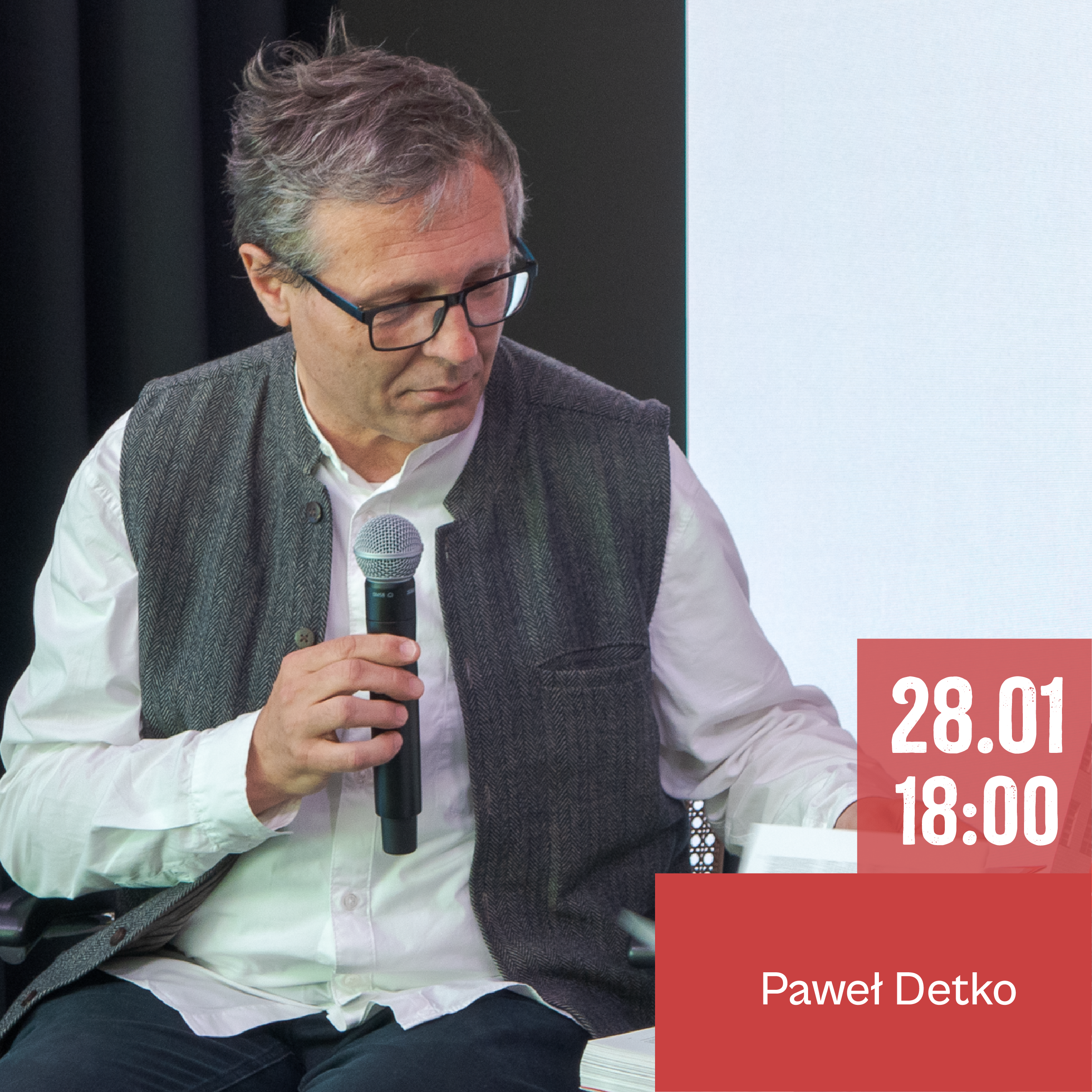
Palaces are historic, old, elegant, beautiful, impressive… Palace architecture is usually analyzed in terms of decoration, style and age.
And palaces can also be simply well designed! And this is how we will look at them during Paweł Detka’s lecture – through the eyes of an architect who sees what we cannot see and is able to talk about it brilliantly. Which of the Warsaw palaces did the speaker consider worth analyzing? Why is it good architecture and what is good architecture? Which designers were the most outstanding?
Paweł Detko
A Warsaw architect and urban planner, as well as a graduate of the Faculty of Architecture of the Warsaw University of Technology, is a partner of Piotr Jurkiewicz in the Warsaw company ArDJ. Additionally, he is a co-founder of the Masovian Chamber of Architects, a competition judge and an activist of the Warsaw Branch of SARP. Additionally, he serves as a member of the Municipal Urban Planning and Architectural Commission for the 2024–2025 term.
He specializes in multi-family housing development, as well as in the revalorization of historic buildings, industrial facilities and urban planning. He is best known as the co-creator of a new district on Pola Wilanowskie as a result of the 1st prize in the SARP urban planning competition in 1997 for DJiO, with architects Piotr Jurkiewicz and Michał Owadowicz. Winner of the 2021 Architectural Award of the President of the Capital City of Warsaw for solutions ensuring accessibility in the expansion of the historic St. Almshouse. Francis de Sales.
With sound and grace. Architecture of pre-war cinemas in Warsaw
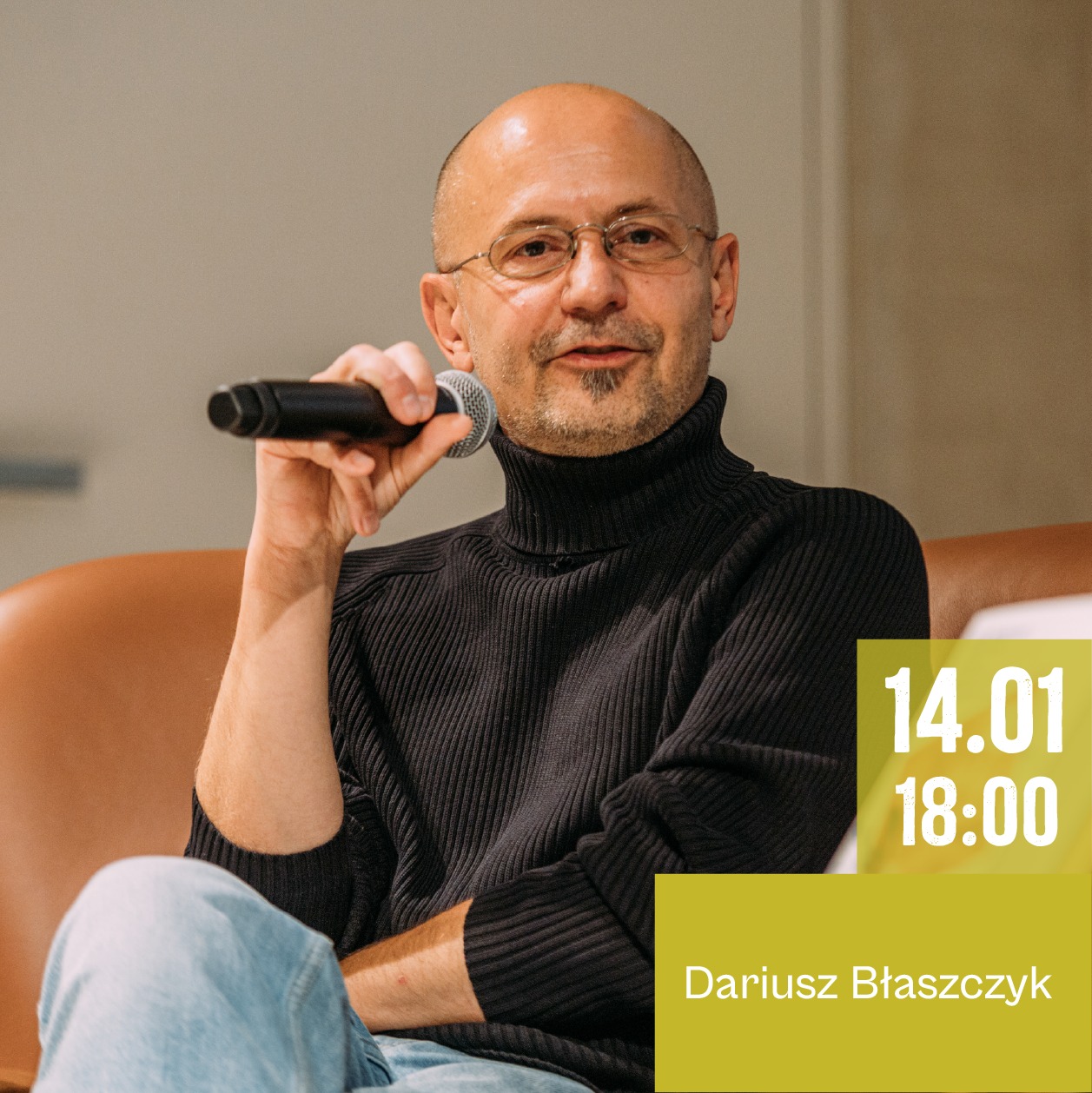
In the interwar period, cinema was an important institution of culture and entertainment. The films were shown in elegant, specially designed rooms or on a sheet or in the yard.
People went to cinemas en masse, and before the war there were more of them in Warsaw than today. They also looked different and sounded different. And it was then that a revolution in the art of film took place – the appearance of sound, and with it a different design of cinema facilities. Warsaw had its own brilliant designer of pre-war modernist cinemas. What were their characteristic features and what is happening with them today?
Dariusz Błaszczyk
Art historian, film and theater director, visual artist. Creator of short films, multimedia projects, video installations, director of the Polish Radio Theater (2010–2023). Author of the monograph “Juliusz Żórawski. Interrupted work of modernism” (2010), “Architecture of the theater. Wojciech Bogusławski in Kalisz” (2016) and “The General’s Brother. Jerzy Sosnkowski (1893–1954)” (2023). Curator of exhibitions Goldberg & Rutkowski (2013, TR Warszawa), PROJECT/DRAWING – graphics of architectural projects during the Second Polish Republic (2018, Gdynia Architecture Weekend), El hermano del General. Jerzy Sosnkowski / 1893 Warsaw – 1954 Buenos Aires (2023, Buenos Aires).
Enthusiasm and chaos. The history of Warsaw buildings in the 1990s.
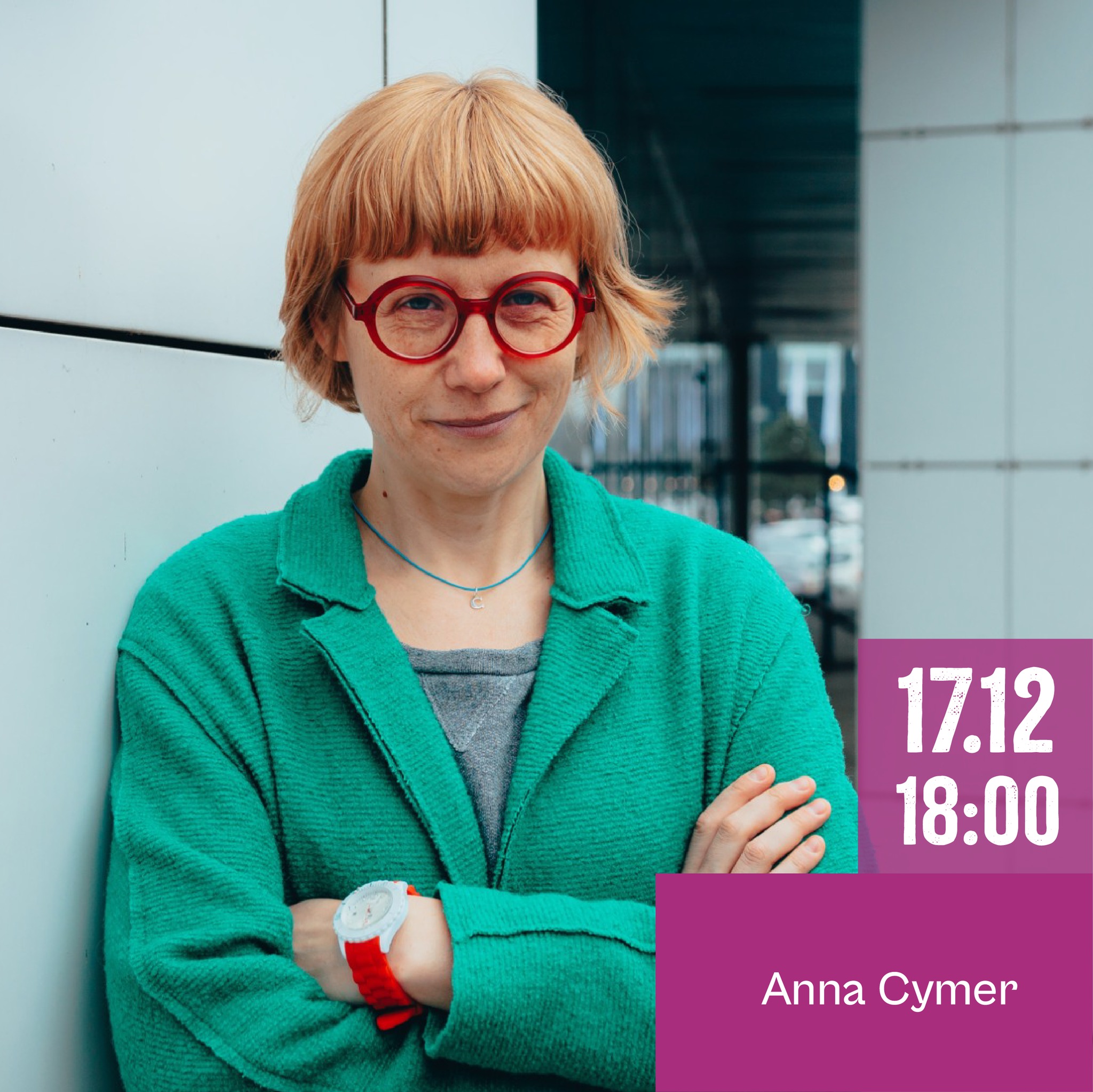
We ridicule them or worship them. We demolishthem more and more often. Sometimes there are also attempts to include them in the register of monuments. Colorful, crazy, strange – buildings from the 90s rarely leave us indifferent.
But why did they suddenly appear in the Warsaw landscape? What made people start building this way? What did this mean for the architectural community and what for business and the inhabitants of Warsaw? Can this new, colorful style be called postmodern and where did postmodernism come from? And finally, which buildings have stood the test of time?
Anna Cymer
She began to study the history of architecture while still a student. Her master’s thesis concerned the idea of a social estate based on the example of the construction of a Warsaw housing estate in Rakowiec. Following the development of residential architecture, she researched post-war concepts of housing estates until she finally became fascinated with the construction of the People’s Republic of Poland in general – which resulted in the book “Architecture in Poland 1945–1989”.
WHERE DID WARSAW COME FROM? THE FIRST BUILDINGS IN OUR CITY
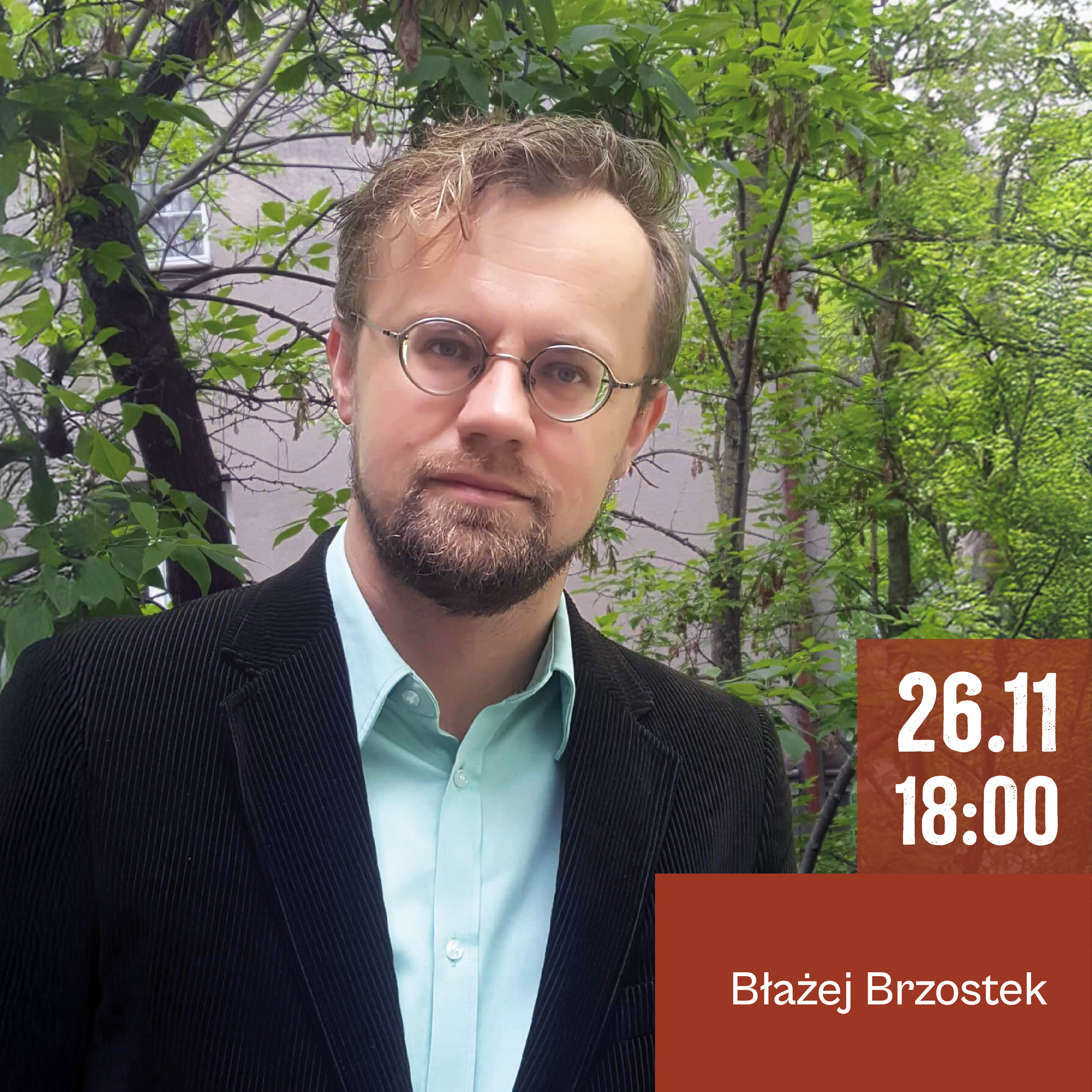
Do we know where the first house was built in today’s Warsaw? Where has the first crop been sown? The first horse was shod? Has the first well been dug? Where was the center and in what direction was the city developing?
Will we learn the answers to the above questions during Błażej Brzostek’s lecture on the beginnings of the development of our city? Or maybe something completely different?
Błażej Brzostek
A historian, works at the University of Warsaw. He deals with social history. He is the author of books about workers in the Polish People’s Republic, cuisine and dining, as well as about Warsaw and Bucharest. He works on the history of women in post-war Poland.